A Journey Back to Who God Created Me to Be
Who Am I?
For years, I struggled with this very question. My identity was buried beneath accolades and accomplishments; shortcomings and mistakes; other people’s opinions, and a few other fleeting personas.
When you don’t know who you are, you’ll become who the world tells you to be. For me, the world wasn’t some distant crowd; it was my household. My identity was shaped by the words spoken over me by people I trusted and those who I believed knew better. I wore their opinions like a name tag I didn’t choose.
When I was little, my mother’s favorite saying was, “Children are to be seen, not heard.” My childlike mind internalized her words as, “Stay silent and look the part without really becoming it.” The phrase also planted the seed that my voice was inadequate, and my words didn’t matter.
And for years, I believed it; living in this truth, appearing more composed than I was, afraid to be found out lest I utter a single word.
Hidden In Plain Sight
My upbringing was a place where love felt conditional, and compassion often came wrapped in conflict. Our house was loud with arguments and quiet with affection. I got good at reading moods, studying faces, and bracing for impact while still searching for peace in places that rarely offered it. Vulnerability wasn’t safe, so I learned to wear a mask that hid my emotions and the innermost thoughts that often showed on my face.
I became skilled at performing, portraying a version of myself that felt safest to me and acceptable to others, especially my family. I chased validation as an adolescent in all the wrong places: relationships that dulled my spirit, environments that distorted my values, and unholy habits that numbed the pain. I wore confidence like a costume, but when I removed it, I felt disconnected and hollow, far from the joyful little girl I remembered myself to be.
Or at least the one I desired to be.
This false identity followed me everywhere, reaching its peak when I turned twenty-four and became a professional dancer and choreographer.
As a dancer, I didn’t need to speak—my movement communicated for me. Through the silence, I could show broken parts of myself while still hiding behind the mask. On stage, I embodied grace and control, but offstage, I was broken.
Every routine became an art of hiding, every performance a polished plea for approval. I even changed my name for a season, choosing one that matched the mask I wore. I molded myself into what was most admired and inspired awe in an audience that only saw the mask, not the soul behind it.
I danced with grace and agility, but beneath the rhythm, I was drowning in anxiety. The fear inside me pulsed along with the beat, and the standing ovation from the crowd only deepened the pain I felt.
Finally, I mastered the art of looking the part without becoming it.
And the mask, once a shield, was now a burden that suffocated my smile, strangled my voice, and shattered my thoughts.
My Pen Knew the Real Me
Over the years, I longed to be authentic, but I didn’t know myself well enough to introduce the real me to anyone. I feared that if I dropped the act, I’d lose the relationships I’d built on set. So, I stayed in character: the happy, fulfilled single mother, the daughter who had it all together, the friend with perfect advice.
I couldn’t afford therapy, and even if I could, the mere thought of talking to a shrink left a bad taste in my mouth. Growing up, therapy wasn’t just discouraged: it was dismissed, mocked even. It was the punchline to a warning and the insult you hurled at someone when they were “acting crazy.” Seeking help meant you were unstable, weak, or broken beyond repair. Healing was only reserved for scraped knees, paper cuts, and broken bones. In my family, you either suffered silently, carried what hurt, or pretended everything was fine.
That way of coping no longer worked for me.
I wanted to find out who I truly was inside because deep down, I knew the person I had become wasn’t who I was meant to be. I needed to understand what was stopping me from living as my real self. I was curious why I felt so different from my family, even though we shared the same blood, the same nose, and the same last name. Ultimately, I wanted to discover the truth about who I was and why I was here.
So, I started to write.
Journaling has always been part of my life, but this kind of writing felt different. It was reflective, introspective, convicting, and sincere. I wasn’t just venting about my day or listing my weekly woes; I was telling the truth. I filled the pages with honesty and transparency. I wrote confessions I was too afraid to speak aloud and asked questions no one dared to ask.
At first, the words came slowly, as if they were testing the safety of the page. But the more I wrote, the more I realized how much I’d been holding back. Writing gave me language for wounds I didn’t even know existed. Things I buried for years, like the fears I’d never spoken to anyone about, found their way onto the page. I wrote about the shame, the guilt, the agony I carried, but didn’t feel safe sharing anywhere else. And the best part? The page didn’t judge me. It didn’t interrupt, correct, or condemn.
It just held me—completely, raw, unfiltered, and truly honest.
The more I wrote, the more questions arose. But the more questions I considered, the fewer answers I found. I wanted greater clarity and clear closure—yet the page could only take me so far. I began to realize that my wounds were deeper than the surface I could see. It wasn’t enough for me to break the mask; I needed to reach the soul beneath it. I needed more than self-reflection. I needed revelation.
So, I invited God in.
But God Knew Me Better
I wrote to God the way I’d been writing to myself—raw, unfiltered, and desperate to be known. I didn't show up with polished prayers or perfect posture, but instead trembling hands and tear-stained pages. I asked questions I didn’t have answers for and confessed what I didn’t understand. I told Him about the ache, the confusion, the parts of me I didn’t know how to fix.
And to my surprise, He listened.
God was patient and tender, something I had never experienced before. He didn’t give me a list of solutions. Instead, He promised His presence—a presence that brought peace unlike anything I’d ever known. That presence made me feel safe enough to dig deeper, and for the first time, I felt protected. I felt loved. I felt cared for.
As I wrote, God revealed things I hadn’t considered. He showed me how my silence had shaped me, how my striving for acceptance had worn me down, and how my identity had been tangled in performance for far too long. He revealed patterns I hadn’t noticed and pain I had normalized. I thought I was just journaling to heal, process, and understand, but God saw deeper.
His light also revealed the spiritual darkness and oppression that had persisted in my bloodline for generations: habits I inherited but never named, beliefs I absorbed but never questioned, toxic cycles I unknowingly repeated. And in that moment of revelation, He didn’t shame me.
He just held me. All of me—raw, unfiltered, and finally honest.
Leaning into God’s presence trained my spirit to recognize His voice. I devoted time to study His Word—not out of obligation, but out of longing. I wanted to know the God I’d been writing to. The more I studied, the more I recognized His voice in my spirit—a soft, definite, unmistakable impression in my heart.
Pretty soon, my reflective journaling shifted from confession to communion. It became my way of deepening intimacy with the One who knew me better than I knew myself. Scriptures grounded me. Prayer equipped me.
Writing became my altar.
I was no longer just processing; I was contending. Renouncing what was never mine to carry. Reclaiming what had been stolen. Declaring God’s truth over the enemy’s lies I’d lived with for too long. And through that, my heart began to heal — not just emotionally, but spiritually.
The journey was no longer about discovering who I was; instead, I was stepping into freedom and becoming who God created me to be.
So, who am I?
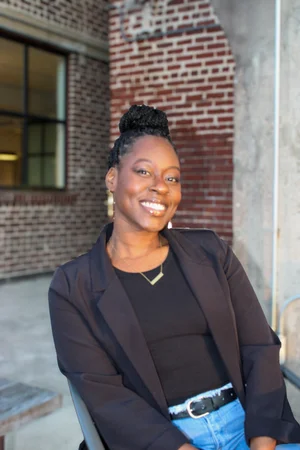
My name is Corisha—Cori for short.
I’m a mother, writer, and disciple of Jesus Christ. He is the foundation on which I stand. My purpose is to spread the Good News of the Lord’s saving grace by sharing my testimony and ministering to others. To date, I’ve filled countless pages with thoughts, words, and stories that He intends to use for His glory.
In my ministry, God has called me to be a voice for women in the wilderness—a sacred season of silence, surrender, and spiritual renewal.
To the woman who loves God but feels distant,
—the one holding it together in silence,
—the one who needs a safe place to write what she can’t yet say aloud,
—the one grieving quietly, growing slowly, or simply trying to breathe,
—the one who wanders in the dark, prays between tears, and wonders if healing is possible—this space is for you.
I’ve been that woman. This blog emerged from my own wilderness season—years of journaling through grief, growth, and grace; pain, pride, and promise. But I assure you: through it all, God is faithful. Healing begins when we let go and trust Him to complete our story—no matter how or where it started.
I pray that you feel the presence of the Holy Spirit through these words, and you allow God to meet you in the quiet pages of your own story.
Be encouraged.